Aristotle, and some 1,500 years later Aquinas, would call the vegetative soul the most basic aspect of the living hierarchy, with Plato too before them attributing the ‘appetitive’ aspect of the tripartite soul to the vegetative principle.
Iamblichus the Neoplatonist would say as well that the vegetative lies at the minimal extreme of life. The basis of the vegetative will is tropism – growth and turning in response to environmental stimuli.
The lotus of Hindu and Buddhist tradition flowers uncontaminated by the dirty world below, untouched by Samsara. ‘I am unsullied by the world, even as the pure and lovely lotus is unsullied by the waters’
Christ would have us consider the lilies of the field. They neither toil nor spin and yet not even Solomon ‘in all his glory’ was ever arrayed like them, neither are they anxious. And yet ‘are you not much more valuable than they?’
Pascal would call man a reed, but a ‘thinking reed.’ Feeble and easily destroyed by the smallest of things, and yet man remains more noble than anything which could crush him – because man can think, and in it ‘all our dignity consists.’ Through thought we ascend, or are brought low.
My mother’s favourite flower is the sunflower, because as she says; ‘they’re so happy.’ The young buds, like many young flowers and leaves, are heliotropic – they face towards and reach out in the direction of the sun.
What to make of all these flowers and reeds?
The plant, the most basic and the minimal extreme in the hierarchy of life, reflects in its simplicity the fundamentals of the life of humanity. It hungers and thirsts for the nourishment right for its life, nourishment like water, light, the sun. This is where it directs its will.
It has its roots in the earth, but it reaches above the dirt and the muddy waters it finds itself in, up towards the skies, flowers blooming and expressing itself beautifully, taking in as much sunlight as it can, with whatever it has at its disposal, waiting patiently if it must. Clouds may cover the sun in their myriad of transient shapes, some in their darkness bring storms and rain, but the plant knows it can turn this to its benefit, and it knows the clouds are passing.
What have they to be anxious about? They know their place, they know their source, they preform as best they ought; why wouldn’t they be happy? Life is simple.
And how far has man fallen that even the plants outdo him?
Humanity is an appetitive, like the plant, a sensitive, and most of all a rational, intellectual animal, but we don’t order ourselves accordingly; whether towards the things of the earth or towards God whom our sun symbolizes.
We wallow in the dirt, we think it’s all there is to life. We worry, grow depressed, feel empty. And when we do look to the skies, it’s to argue over the passing shapes of the clouds. When the sun shows itself we face back down again and take cover, unable to bear it. We grow envious at those who do take in the light we rejected in our lack of understanding.
Perhaps some claim they’ve found the real sun in a puddle, even fall in love with their own reflection; a sunflower believing itself to really be its namesake. Maybe we wonder if the many stars and their pale light will grant us what we wish, or perhaps back to the earth again, digging deeper for something, anything. How could anyone truly grow and bloom with attitudes like these? We see and voice our discontent at the many ills of the age, and it appears that the general atmosphere is believing things will only grow worse.
Some, however, do direct their will towards their nourishment and their life. Converting the waters into their lifeblood, the storms into growth, worshipping the One and feasting on its light. They bloom, taking after Pascal’s thinking reeds, with beautiful and creative thoughts, some will even bear noble fruit. Their brethren may interpret them as passive, inactive, and yet their work influences and inspires beyond what they could possibly see from the ground alone. They’re more active in their supposed inactivity than any of what these sad sprouts who unknowingly benefit from them could imagine.
Life is simple. Man complicates it.
Sum, ergo oro.
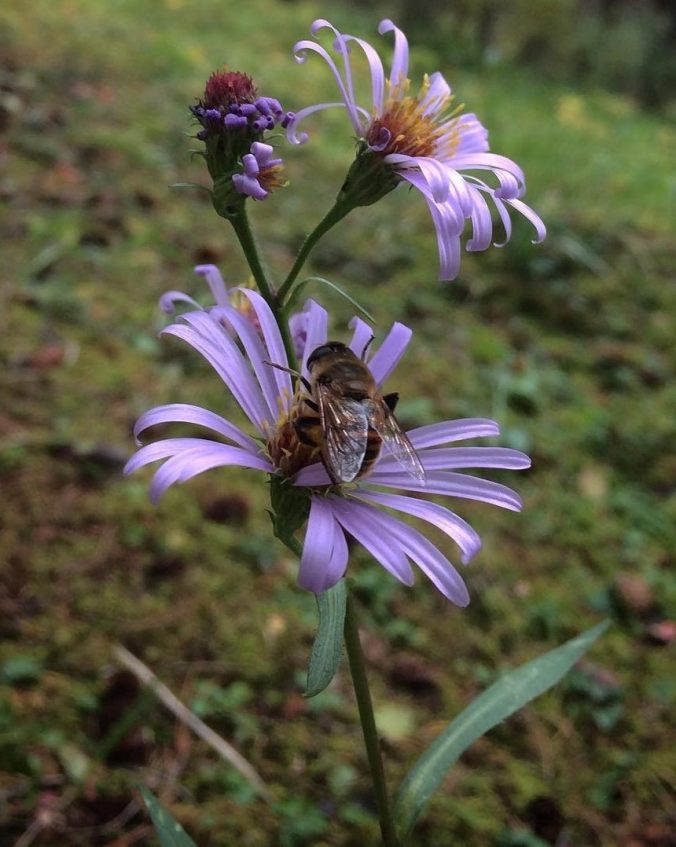
 Sum Ergo Oro